
The Interpreter
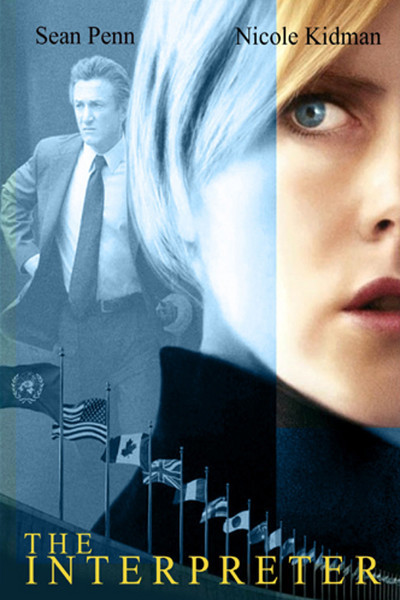


“The Interpreter,” is the kind of film that’s become somewhat of a Hollywood rarity. While boasting the talents of Oscar winners Sean Penn, and Nicole Kidman, and director Sydney Pollack, “The Interpreter,” does not seek to tell a particularly probing or for that matter, particularly innovative story. However, being the first time that Ms. Kidman and Mr. Penn have ever worked together, and also being the first film ever to be shot at the United Nations, “The Interpreter,” set a bar for itself that it has no intention of reaching.
Kidman plays Sylvia Broome a U. N. interpreter whose an expert in the language of Da, a made up language, for a made up African nation currently in the throws of a power struggle. Early on we are given a glimpse into the inner workings of the United Nations (or what we might imagine them to be) as the Ambassador from the United States tries to broker a deal to keep the African nation to keep it from being sanctioned. Being that Pollack works so brilliantly with themes of power and the corrosive nature it has on the most well intentioned people and institutions (1993’s “The Firm” being one of many examples) we are led to believe, while certainly not being a message movie, that “The Interpreter,” might have something more to offer then your typical end of spring Hollywood fare.
Sylvia along with her U. N. colleagues are forced to evacuate one day due to a defective metal detector. Having forgot her bag in her booth she returns where she hears a threat against a visiting foreign dignitary known only as ‘the teacher.’ After being spotted in the booth the film begins the cat and mouse scenario in which Ms. Broome must identify the conspirators before they silence her permanently.
Enter Sean Penn’s alcoholic Secret Service Agent, Tobin Keller, getting back to work after his wife died two weeks ago in a car accident. It’s not a far stretch as to where the film will go from here. Predictably Penn’s agent falls in love with Kidman’s interpreter. While this much can be extracted from the film’s marketing campaign, the tiny detail of Keller having lost his wife less then two weeks earlier almost makes this pill too difficult to swallow. While it may be a forgivable oversight, it is this lack of attention to detail that ultimately ends up being “The Interpreter’s”, undoing.
The relationship of these two characters becomes a drag on a once crisp and efficiently paced film. The film then becomes suffocated by it’s own disregard and weighed down but it’s own sense of self-importance. While Penn and Kidman are a pleasure to watch on screen, there are still certain scenes that will leaving you scratching your head asking, “what they make them do that for?”
Pollack is still able to pack moments of intrigue and excitement into an otherwise convoluted story line. Kidman’s character is teased mercilessly on the free way as a car constantly threatens to collide with her before backing off, and a later scene involving a city bus colors shades of Hitchcock in what proves to be the movie’s most thrilling scene. The rest of the film however, proves to be less lush then it’s shiny veneer.
What ultimately redeems “The Interpreter,” is the old school appeal of it. The lavish cinematography and the high wattage stars that, despite being in a conventional film, refuse to convey conventional action heroes. Penn in the most routine scenes displays a vulnerability and seriousness that other actors of the genre wouldn’t consider broaching. Pollack does the film an undeserved service by employing two actors who could make a dramatic reading of yellow pages intriguing. Kidman and Penn don’t have quite as difficult a task here, but just about.
by Dave Fults