
Courtney R. Brown, Jr. – Motown Mafia
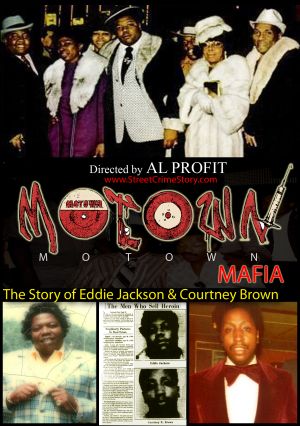


Detroit in the 70s was a heroin highway, and no one knows that better
than filmmaker Courtney R. Brown Jr. His documentary film Motown Mafia
uncovers the multi-million heroin market happening in Detroit in the
1970s. Motown Mafia screened at the New York International Film Festival in Los Angeles and won Best Documentary. Motown Mafia will be a part of ITN Distribution’s Cannes line-up.
IFQ sat down with Courtney Brown Jr. and discussed his film and the truth he
was able to uncover after decades of speculation.
IFQ: How did you get such credible interviews on the subject matter?
Courtney R. Brown, Jr. (CBJ): My father, Courtney Brown Sr. Charles Rudolf and Black Butch, give firsthand accounts of their involvement in the Eddie Jackson Organization during that era. Eddie Jr., Cornell Robinson and I gave our accounts as we lived them as children. Huckabuck, Jap and Eric were all affiliates of the organization and knew Eddie and my father well. Dr. Carl Taylor is a renowned sociologist and Scott Burnstein is a well-known crime historian and author. They both helped put the story in a historical and social context.
IFQ: Could these gangsters survive in today’s Detroit?
CBJ: Yes, they could survive in today’s Detroit due to the fact that money and power are still the currencies of the street. That said, if they operated in today’s Detroit they would have insulted themselves from the day-to-day operations of the parasitic nature of today’s so-called dealers. Also due to federal authorities’ efforts in penetrating major narcotic organizations with paid informants and snitches, they would have been forced to operate in the shadows in today’s Detroit.
IFQ: Has the city’s heroin traffic slowed down since then?
CBJ: Yes. The 70s was the Golden Era of the heroin trade. It was the perfect storm of returning Vietnam vets with heroin habits, remnants of the peace and love movement and a large customer base of industrial factory workers eager to spend their paychecks on heroin. In addition, the rise and the usage of cocaine, ecstasy and other pharmaceuticals have dramatically cut into heroin’s market share.
IFQ: Jackson and Brown have been called “gentlemen gangsters.” What is a
gentlemen gangster?
CBJ: They were men that saw their narcotics trafficking as purely a business and relished the opportunity to share their success and wealth. In short, they spent their time spending and giving away their money, not killing and beating up people.
IFQ: Are Jackson and Brown still considered legends to the Detroit natives?
CBJ: Yes, very much so. The Jackson Organization is still the standard bearer for narcotics trafficking in the Detroit area. 40 years after the fact, their exploits and wealth are still spoken about and still the things legends are made of. They are Detroit’s own Lucky Luciano and Meyer Lansky.
IFQ: What was the actual location like? Breathing in this rich Detroit history,
how did that fuel the documentary for you?
CBJ: We shot the majority of the interviews on the same streets where the Jackson Organization conducted a large portion of their business. Those same streets are synonymous with Detroit’s Golden Era of the 40s and 50s black community. Shooting on those streets allowed us to get a feel before and during the Jackson Organization and what that area has become today.
IFQ: Talk of the operation is very open in the film. Did you have trouble
getting the right information out of your sources?
CBJ: No. The information came easily. Mainly because all the major characters had already served prison time for those activities so the events are a matter of public record and street legend. Secondly, most of these gentlemen mostly in their 60s and 70s looked at our documentary as an opportunity to set the record straight on the Jackson Organization during its hay day.
IFQ: What’s your next project?
CBJ: Phase 2 of our project is two parts. Firstly, we are developing a script and funding package for a feature film based on the book and documentary. Secondly, we have started to work on a script and a book for a sequel to the story chronicling Mr. Jackson and my father’s exploits after being released from prison, and the exploit of Eddie Jr. and I as young men.