
Crash


It seems “Crash,” has these expectations in mind, slowly playing with our expectations to build the most explosive and impressive drama in this young year. Larenz Tate and Mr. Bridges begin the film pontificating on the expectations of white society on young black men, after a frustrating dining experience in an affluent white enclave. After asserting that they have more reason to fret then the society that surrounds them Mr. Bridges asks his associate why they aren’t afraid.
Mr. Tate shrugs and suggests, “Because we got the guns.”
Director Paul Haggis plays with our expectations of race, racism, and political correctness and his characters soar because of it. No one escapes the murky gray waters as villains become saints and saints become murderers. Even the cinematography remains purposely blurred at points, and come into sharp relief in others, representing the blind demolition of racism occasionally broken by a moment of clarity.
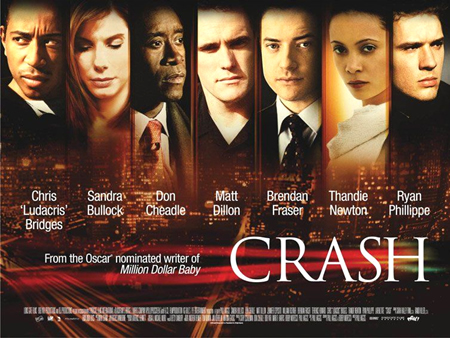
“Crash” follows the motion of seemingly disconnected objects passing each other at high velocity. The slightest bump in the road or pot hole is what sends these vehicles into violent collision. “Crash,” chronicles the intersecting lives of two young thieves (Chris ‘Ludicrous’ Bridges and Larenz Tate) a District Attorney and his over privileged wife (Brendan Fraser and Sandra Bullock) a young cop and his racist partner (Ryan Philippe and Matt Dillon) and a world weary detective and his estranger partner/lover (Don Cheadle and Jennifer Esposito.)
“Crash,” is most assuredly a writer’s movie. Haggis doesn’t quite forsake the aesthetics of the film but it clearly takes a back seat to the crisp, thought provoking, and at times humorous dialogue brought to stunning life by an enclave of brilliant performances from chronically underemployed performers. Sandra Bullock, Matt Dillon and Ryan Philippe all turn in their best work in years and such consummate professionals as Mr. Cheadle and Mr. Fraser bring their game up a notch.
“Crash,” is the kind of Hollywood filmmaking few studios dare anymore. It’s mere presence and ambition is not only invigorating to its audience, but apparently to its performers and filmmakers as well.