
Klaus on Krenwinkle – “Life After Manson”
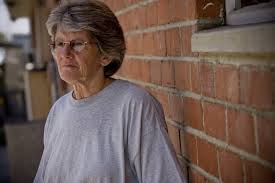


Life after Manson is a reflective and intimate 25 minute documentary directed by award–winning filmmaker Olivia Klaus (Sin by Silence). Klaus sits down with Patricia Krenwinkle, the former lover and devoted follower of CharlesManson. This Manson doc focuses on Krenwinkle who has been a high profile inmate at The Californian Institute for Women for the past 45 years. She gives her first on-camera interview in 2 decades in an attempt to shed light on self-destruction and the horrendous choices that led to a lifetime behind bars for her involvement in one the most gruesome crimes in American history: “The Manson Family Murders.”
Audiences learn that Krenwinkle was raised in a good family and was a normal child. Then, in her teenage years, a disturbing pattern began to emerge; cutting school, doing drugs, hanging out with the wrong crowd: the usual suspects. Then at age 18 she meets Charles Manson and ends up in a LSD-fueled quasi commune with other runaways and outcasts – the rest goes down in the annals of American crime history. Whilst the film reveals that she was completely under Manson’s hypnotic spell, NOTHING can justify her participation in the brutal murders of Abigail Folger and Leno LaBianca as well as being complicit in the murder of beautiful actress Sharon Tate (Valley of the Dolls) and her unborn son.
Against the drab gray backdrop of the prison walls, Krenwinkle, now 67, recalls “In the beginning it was just me and him (Manson) and I thought I was in love. I didn’t see how much of me was getting lost along the way. I gave up every little bit of me to that man, who demanded every little bit of me. We all followed because we didn’t know how to stop a monster.”
The chilling images of Krenwinkle with the X on her forehead and giggling with fellow Manson women killers, Susan “Sadie” Atkins and Leslie Van Houten is forever embedded in our minds. A far cry from the haggard, non-descript looking woman who frequently sits before a parole board. Not surprisingly, her request for freedom is always turned down. Tate’s still-devastated sister Debra is always present and believesKrenwinkle could never be rehabilitated because she is a sociopath. Occasionally throughout the film you can’t help feeling a wee bit sorry for her, she seems remorseful and sincere but then you remember the savagery and the bludgeoning with knives and forks.
Overall this doc, at times atmospheric, is well shot and directed. Numerous projects have focused on the madman himself so this different angle works plus it may be Krenwinkle’s last interview. We can’t help but question Klaus’s agenda. It’s obvious Krenwinkle felt very comfortable with the collaboration. Is Klausattempting to present her as a guilt-ridden woman who should be freed after spending more than 4 decades in prison? Is she highlighting the effects of brainwashing and the consequences of committing evil crimes? Is it a type of character study? Or, is the film almost therapeutic for Krenwinkle, an opportunity to “share” and open up about her life as if reading from her memoir or diary. Whatever the catalyst, any demystification ofManson’s infamous female accomplices will continue to attract macabre interest from around the world.
The 25-minute “Life After Manson” debuted at the Tribeca Film Festival on April 18, 2014.