
Million Dollar Baby
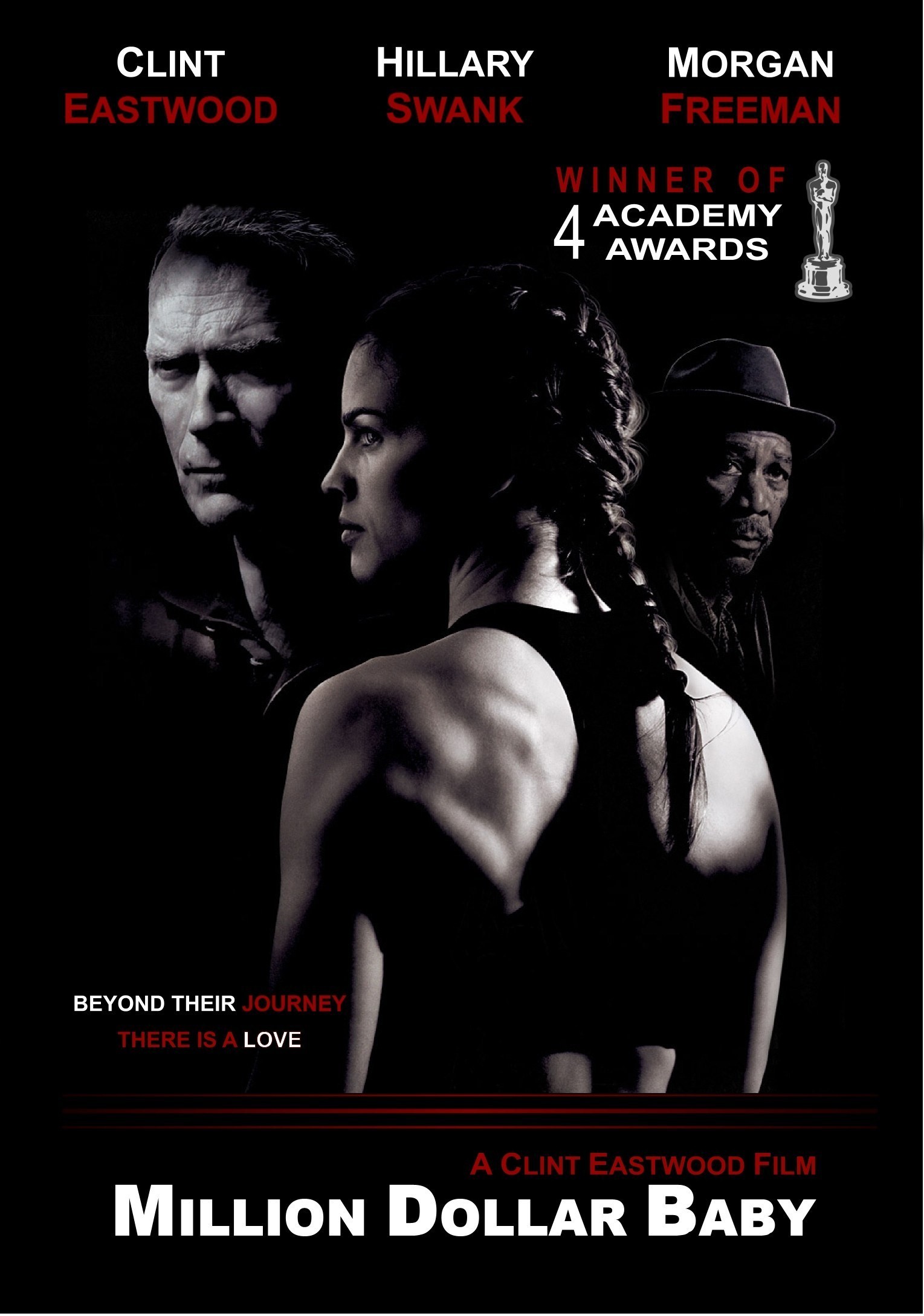


However, after “Mystic River,” and “Million Dollar Baby,” it seems Mr. Eastwood is exploring a new dimension to his toughness. In “Mystic River,” through characters like Jimmy Markum and Dave Boyle (played by Sean Penn and Tim Robbins) Mr. Eastwood explores the psyches of men hanging on to the edge of their realities by their fingernails. With every breath and gesture, these men express the delicate balancing act of maintaining their sanity, just by maintaining their lives. Mr. Eastwood has successfully translated his superbly minimalist acting style to a wonderfully minimalist directing style. By stepping back, Mr. Eastwood allows the considerable talents of his actors to inhabit their characters, telling their stories in Eastwood-esque fashion to greater effect with a glance or posture then any line of dialogue.
Now Mr. Eastwood goes further with his ‘weight of world’ story and directorial style with Academy ringers Morgan Freeman, and Hillary Swank.
“Million Dollar Baby,” is the story of a thirty-one year old waitress named Maggie Fitzgerald who dreams of being the female heavyweight champion. Hillary Swank is given her first real chance to display her immeasurable talents since her tour de force performance in “Boy Don’t Cry.” Maggie courts a grizzled trainer (played by Clint Eastwood) named Frank who has the nasty habit of training championship fighters, but failing to take them to the championship (if you think you know where this is going, trust me you don’t.).
“Million Dollar Baby,” deals greatly with the theme of lost opportunities. Mr. Eastwood runs a gym with his friend and former fighter, Scrap, (played with appropriate world weariness by Mr. Freeman). The lost opportunities have caused Mr. Eastwood to be more cautious. Both with his fighters and his affections.
The movie for a while lulls its audience to sleep with its jab. Obeying the conventions of sports and boxing films. Maggie shows up at Frank’s gym and works out without encouragement. Scrap gives her a few pointers to keep her encouraged and finally, Frank, out of equal parts pity and hope agrees to take her on as her fighter.
Maggie’s ascent through the boxing ranks and her daughter/father relationship with Frank obey genre for a time, but only to transcend it. The third act, however, takes a much darker and wholly unexpected twist, probably the most surprising twist ever to be seen in a Clint Eastwood film.
This last twist transforms the film from a superb genre piece, to something much more raw and visceral. The film’s haunting conclusion sticks to your gut like no other film has even attempted this year, making “Million Dollar Baby,”, if nothing else, the most raw film experience of the year.
“Million Dollar Baby,” is a film built on all aspects of Mr. Eastwood’s toughness. His natural grizzle and squinted glares remain, but the ability to get tough with his emotions has elevated Mr. Eastwood to a status unknown by his iconic colleagues working today; a living legend whose still at the top of his game.